
Investing in reliable email marketing tools remains the highest-ROI growth strategy for small businesses, generating up to $42 for every dollar spent. Direct inbox access delivers unmatched conversion power compared to fluctuating social algorithms.
Modern email marketing platforms eliminate tedious manual outreach through intelligent automation. The right software effortlessly nurtures incoming leads, drives repeat sales, and executes targeted campaigns while saving dozens of work hours each week. Choosing the right platform tailored to your specific budget and goals determines your overall revenue potential.
This comprehensive 2026 guide reveals the top software solutions designed to maximize your customer engagement and accelerate business growth.
What are Email Marketing Platforms?
Modern email marketing platforms are dedicated software applications designed to create, send, automate, and track email campaigns at scale. These comprehensive systems centralize your subscriber database, manage audience communication, protect sender reputation for high inbox deliverability, and convert prospects into loyal paying customers.
To get the highest return on investment, small businesses should prioritize solutions with these essential core capabilities:
- Drag-and-Drop Builders: Design polished, mobile-responsive emails in minutes using visual blocks without writing a single line of HTML code.
- Automation Workflows: Set up behavior-triggered email sequences, such as welcome series, lead follow-ups, and abandoned cart reminders, running 24/7 on autopilot.To ensure your campaign landing pages rank well, follow our complete SEO checklist.
- Contact Segmentation: Divide your audience by interests, purchasing behavior, or demographics to send hyper-targeted messages that boost click-through rates.
- Analytics and Reporting: Monitor real-time performance metrics, including open rates, clicks, bounce rates, and revenue generation, to refine your ongoing marketing strategy.Along with email metrics, track your organic search performance by learning how to submit sitemap to Google Search Console.
At No1 Digital Marketing Agency we help businesses set up automated email marketing campaigns to scale their sales.
Important Types of Email Marketing Campaigns
Implementing diverse types of email marketing is essential for building strong customer relationships and maximizing overall revenue. Relying on a single format limits engagement and reduces conversion opportunities.
Every growing small business should leverage these four foundational campaign types:
1. Welcome Emails
- Welcome sequences deliver the highest open rates of any campaign.
- They introduce your brand story to new subscribers immediately upon signup.
- Use this series to set clear expectations and deliver promised lead magnets.
2. Newsletters & Content Updates
- Consistent newsletters provide educational value and industry insights.
- They keep your business top-of-mind without aggressive selling.
- Regular content updates establish authority and drive steady website traffic.
3. Promotional Emails
- Dedicated promotions announce limited-time discounts, seasonal deals, and product launches.
- They create urgency with clear calls-to-action to stimulate quick buying decisions.
- These campaigns directly accelerate short-term cash flow and product sales.
4. Transactional Emails
- Transactional messages include receipts, order confirmations, shipping updates, and password resets.
- Customers actively expect and open these operational notifications.
- Optimize these high-engagement touchpoints with helpful next steps or subtle cross-sell recommendations.
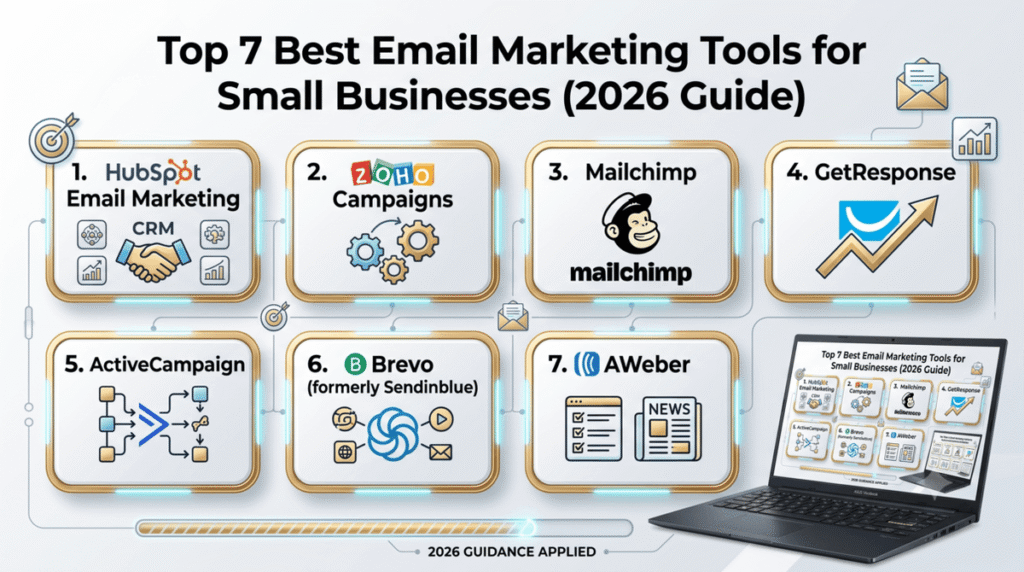
Top 7 Best Email Marketing Tools in 2026
Selecting the right email marketing tools is critical for driving predictable conversions, managing customer relationships, and executing automated campaigns efficiently.
1. Brevo (Formerly Sendinblue)
Brevo stands out as an all-in-one customer engagement powerhouse that combines marketing automation with robust sales functionality. Its pricing structure charges per email sent rather than contact list size, making it exceptionally cost-effective for growing contact databases.
- Key Capabilities:
- Strict free tier limit of 300 emails per day with unlimited contact storage.
- Built-in sales CRM to manage pipelines and track lead interactions seamlessly.
- Integrated multi-channel marketing, including SMS marketing and WhatsApp campaigns.
2. MailerLite
MailerLite delivers enterprise-grade email functionality wrapped in an exceptionally clean, beginner-friendly user interface. It eliminates feature bloat while providing advanced automation and page-building tools at a highly accessible price point.
- Key Capabilities:
- Highly intuitive drag-and-drop newsletter builder and responsive landing page creator.
- Visual automation workflow designer for welcome series and lead nurturing.
- Affordable paid tiers that scale gently as your active subscriber count grows.
3. Mailchimp
Mailchimp remains an industry benchmark for businesses seeking an all-in-one digital marketing ecosystem with minimal setup friction. Its guided configuration helps beginners launch professional multi-channel campaigns in record time.
- Key Capabilities:
- Extensive library of pre-built, multi-channel templates for email, social, and web.
- Streamlined, beginner-friendly onboarding with step-by-step campaign guidance.
- Predictive segmentation and AI-assisted subject line recommendations.
4. HubSpot Email Marketing
HubSpot offers an enterprise-level inbound marketing environment centered around its powerful, free customer relationship management database. It excels at closing the gap between marketing outreach and direct sales pipeline activity.
- Key Capabilities:
- Seamless native CRM integration that logs every email open, click, and reply automatically.
- Personalized lead nurturing triggers based on specific contact lifecycle stages and site visits.
- Advanced dynamic personalization tokens pulled directly from customer records.
5. Zoho Campaigns
Zoho Campaigns provides comprehensive email marketing automation engineered specifically for businesses that already rely on the Zoho ecosystem. It delivers exceptional value with deep software synergy at an unbeatable price point.
- Key Capabilities:
- Native two-way synchronization with Zoho CRM, Zoho Analytics, and Zoho Books.
- Highly budget-friendly pricing plans suited for lean startups and small agencies.
- Robust consent management and automated list-cleaning protocols.
6. ConvertKit (Kit)
Kit is specifically engineered for professional creators, bloggers, podcasters, and digital educators. Its subscriber-centric architecture replaces rigid, messy contact lists with flexible tagging systems to track detailed reader intent.
- Key Capabilities:
- Creator-focused infrastructure optimized for paid newsletters, digital downloads, and memberships.
- Advanced tag-based subscriber management system to segment readers without creating duplicate entries.
- Visual automation funnels triggered by link clicks and purchase actions.
7. GetResponse
GetResponse functions as a comprehensive marketing machine that extends far beyond standard newsletters. It combines automated email delivery with end-to-end conversion funnels to capture and convert leads in one unified platform.
- Key Capabilities:
- Built-in webinar hosting that directly integrates into automated email invite sequences.
- High-converting landing page and popup builders with complete A/B testing.
- Pre-designed automated conversion funnels for lead generation and e-commerce sales.
Comparison of the Best Free Email Marketing Tools
Leveraging high-quality free email marketing tools allows startups to test campaigns without upfront costs. While many leading email marketing platfor ms provide no-cost tiers, their monthly sending caps, contact limits, and available features vary drastically for growing businesses.
| Tool Name | Free Plan Limit | Key Feature | Best For |
| Brevo | Up to 100,000 contacts; 300 emails/day | Built-in sales CRM and multi-channel marketing | Businesses with large lists needing daily newsletter sends |
| MailerLite | Up to 250–500 subscribers; 2,500–12,000 emails/month | Drag-and-drop editor with single-trigger automations | Content creators wanting clean visual campaign builders |
| Mailchimp | Up to 250 contacts; 500 emails/month | Pre-built multi-channel templates and simple onboarding | Beginners learning foundational email campaign setups |
| HubSpot | Up to 2,000 marketing emails/month; 2 user seats | Native two-way CRM contact synchronization | B2B businesses aligning email outreach with sales pipelines |
How to Choose the Best Email Marketing Tools for Your Business
Selecting the right email marketing tools is a long-term operational decision that directly influences your bottom line. Evaluating software requires looking beyond introductory discounts to focus on core performance factors that sustain campaign profitability.
Prioritize these three critical pillars before committing to any software:
1. High Deliverability Rates
- Deliverability determines whether your messages reach the primary inbox or get lost in spam folders.
- Choose providers that enforce strict anti-spam policies and maintain high shared-IP sender reputations.
- Ensure the platform supports critical authentication protocols like SPF, DKIM, and DMARC out of the box.
2. Ease of Use & Native Integrations
- A clean visual workflow builder eliminates the need for expensive design agencies or custom coding.
- Verify native, codeless integration with your current business stack, particularly WordPress, WooCommerce, and core CRM systems.
- Seamless connectivity ensures instant customer data synchronization and real-time behavioral purchase tracking.
3. Scalability & Transparent Pricing
- Evaluate how monthly costs scale as your contact list expands from hundreds to tens of thousands of subscribers.
- Watch for hidden tier upgrades that restrict automation rules, user seats, or essential segmentation filters.
- Pick a platform with transparent tier progressions so software expenses scale proportionally with actual business revenue.
Frequently Asked Questions (FAQ Schema)
Which is the best free email marketing tool for beginners?
Brevo and MailerLite are the best options because they provide visual builders and generous free plans with essential features.
What are the most effective types of email marketing?
The most effective types of email marketing are automated welcome sequences, educational newsletters, promotional offers, and transactional receipts.
Can I do email marketing without a website?
Yes, modern email marketing tools include built-in hosted landing pages and direct signup forms to collect leads from social media and ads.
How can small businesses build an email list from scratch?
Offer a high-value lead magnet (like a free checklist or discount code) using embedded signup forms to collect permission-based subscribers.
What is the best frequency to send marketing emails?
Sending 1 to 2 targeted emails per week delivers consistent brand engagement without overwhelming subscribers or triggering spam complaints.
How do I choose between free and paid software?
Start with free email marketing tools to test initial campaigns, then upgrade to full email marketing platforms once your list exceeds free contact caps or requires advanced automation triggers.
Conclusion
Building a profitable customer audience starts with taking direct control of your communications. Choosing the right email marketing tools is not about picking the most expensive software packed with overwhelming features. Instead, the right platform is the one that aligns seamlessly with your immediate business budget, current technical workflow, and marketing goals.
Every day you delay building an email list is another day of leaving valuable customer relationships and repeat sales on the table. Stop overthinking the process. Pick a platform that matches your needs, activate a free tier, and create your very first subscriber list today. Your direct path to higher revenue and customer loyalty starts with your first sent message.