
When you launch a new website or blogging subdomain, the biggest challenge is driving organic traffic from search engines. The most effective and reliable way to achieve this is by mastering On-Page SEO for Beginners. If you want your web pages to climb the search engine results pages (SERPs), you must understand the core principles of on-page optimization. This comprehensive guide breaks down every essential concept in clear, simple terms.
1. What is On-Page SEO and Why It Matters?
Before diving into advanced tactics, you must clearly understand What is on-page SEO. On-page SEO refers to the practice of optimizing individual web pages in order to rank higher and earn more relevant traffic from search engines like Google.
Unlike off-page SEO, which focuses on external signals like backlinks, on-page optimization happens entirely on your own website. It involves fine-tuning your content, HTML source code, architecture, and user experience. When you apply proper basic on-page SEO techniques, search engine crawlers can easily crawl, index, and understand the context of your pages.
2. Importance of On-Page SEO for Your Website
Many new site owners wonder whether simply publishing random content is enough to succeed. The short answer is no. You need to recognize the true Importance of on-page SEO for long-term digital success:
- Better Search Rankings: Search engines analyze your page structure and keyword placement to determine which search queries your content answers best.
- Improved User Experience (UX): Clean formatting, appropriate headings, and fast-loading elements keep visitors engaged on your site for longer periods.
- Higher Conversion Rates: When your pages target the right audience with precise context, your website goals—such as newsletter signups, lead generation, or product purchases—are met more effectively.
3. Essential On-Page SEO Checklist for Beginners
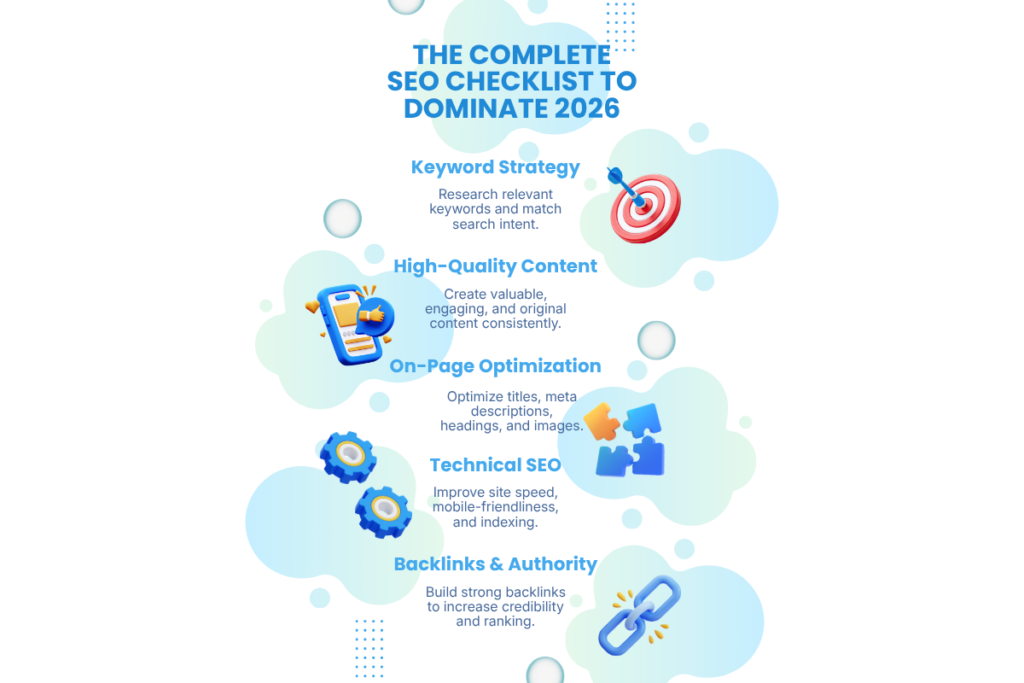
Before you hit the “Publish” button on any new blog post, you should follow a structured routine. A reliable On-Page SEO checklist for beginners includes several key action items:
A. Eye-Catching and Optimized Title Tag
Your title tag is the very first element users see on Google search results. Ensure your primary keyword is placed near the beginning of the title, and keep the overall length within 60 characters so it does not get cut off. Using power words like Ultimate, Easy, or Step-by-Step can dramatically improve your Click-Through Rate (CTR).
B. Clean and Short Permalinks (URLs)
Your URL structure should be clean, descriptive, and concise. For example, if your post is about foundational optimization, your slug should look like [yoursite.com/on-page-seo-for-beginners](https://yoursite.com/on-page-seo-for-beginners) rather than a long, messy string of random numbers or unnecessary words.
C. Strategic Keyword Placement
Incorporate your focus keyword naturally within the first 100 to 150 words of your introduction. This signals to search engines immediately what your main topic is, without resorting to unnatural keyword stuffing.
4. Step-by-Step Guide on How to Do On-Page Optimization
If you are unsure where to begin your optimization workflow, follow these practical steps to elevate your content quality:
- Use Proper Heading Tags (H1, H2, H3): Your main page title serves as the H1 tag. Use H2 tags for major sections and H3 tags for sub-sections. Distribute your secondary keywords naturally within these headings.
- Write Engaging Meta Descriptions: Write a concise summary (around 120-150 characters) that includes a clear call-to-action and your primary keyword to attract searchers.
- Optimize Images with Alt Text: Search engines cannot visually interpret images, so adding descriptive alt text containing relevant keywords ensures your visuals contribute to your overall SEO value.
- Internal and External Linking: Link contextually to other related articles on your own domain (internal links) and reference authoritative external sources to build credibility.
5. Key Benefits of On-Page SEO for Beginners
When you implement proper On-Page SEO for Beginners rules on your website, you unlock several incredible advantages. The biggest benefit is that your organic traffic increases and search engines can understand your content much faster. Additionally, following On-Page SEO for Beginners correctly enhances user experience, ensuring visitors stay on your site longer while keeping the bounce rate low. Ultimately, this practice strengthens your overall online visibility and drives long-term success.
Q1: What is On-Page SEO for Beginners?
A: On-Page SEO for Beginners is the process of optimizing web pages.
Q2: Why is proper optimization necessary?
A: It helps search engines understand your site better.
Q3: How do I begin with optimization?
A: You can start by improving your title tags and URLs.
Q4: Is it difficult to learn?
A: No, On-Page SEO for Beginners is quite simple to master with practice.
Q5: When will I see results?
A: Consistent implementation of On-Page SEO for Beginners yields gradual traffic growth.
Conclusion
On-page optimization is not a one-time task that brings instant overnight results, but rather the essential foundation for long-term organic traffic growth. By consistently applying the practices, guidelines, and structural elements outlined in this guide to every new post you create, you will steadily watch your website visibility and search rankings improve. Start implementing these strategies on your digital marketing blogging subdomain today!